As aerospace manufacturers and supply chains prepare for sustained increases in aircraft production, composite materials are taking on an increasingly strategic role across the global supply chain. Lightweight, strong and capable of supporting increasingly sophisticated aircraft designs, advanced composites are firmly established across commercial aerospace and defence programmes. Their growing importance is also changing the way manufacturers think about procurement, inventory, production efficiency and the organisation of the factory floor.
For Velocity Composites plc, that evolution is creating opportunities to help customers translate increasing composite content into scalable manufacturing capability.
James Eastbury, Chief Customer Officer at Velocity Composites, believes the next phase of aerospace growth will place increasing emphasis on how effectively manufacturers manage these high-value materials. “Composite technology has become an integral part of modern aerospace manufacturing and we are now seeing the supply chain evolve around that,” said Eastbury. “For our customers, the opportunity is to take sophisticated materials and processes and make them increasingly efficient and scalable as production volumes grow. That is exactly where Velocity can add value.”
Undoubtedly, aircraft manufacturers are entering an important period for production. Strong order books across commercial aerospace, continued investment in defence and the development of future aircraft platforms are creating long-term demand throughout the supply chain.
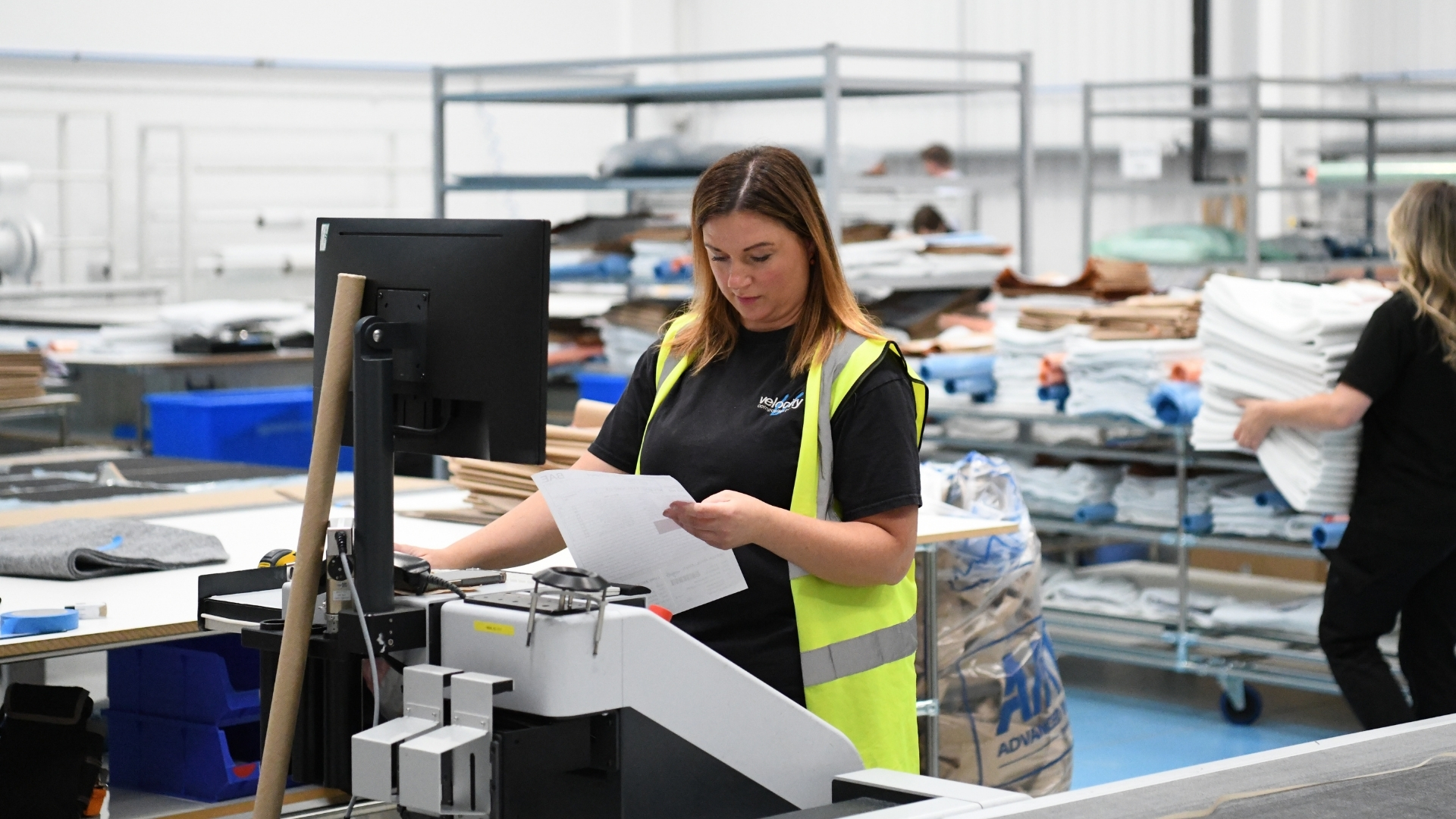
Converting that demand into completed aircraft requires manufacturing systems capable of delivering materials to production lines precisely when they are required. Composite materials bring their own characteristics to that challenge. They can require controlled storage, defined shelf lives, batch traceability and specialist processing before reaching the assembly line.
Velocity’s model is designed around managing those requirements as an integrated process. Through procurement, inventory management, engineered kitting, digital manufacturing and logistics, the company prepares composite materials in the format required for production, allowing customers to concentrate resources on the manufacture and assembly of aircraft. Eastbury sees that specialisation becoming increasingly valuable as build rates rise.
“Growth across aerospace creates an opportunity for every part of the supply chain to become more specialised and productive,” he explained. “Our role is to manage composite materials exceptionally well. By taking responsibility for material management, conversion and engineered kitting, we can help customers create capacity within their own operations and focus skilled resources on the activities where they generate the greatest value.”
The economics of composites also make material efficiency increasingly significant. Advanced aerospace materials represent substantial value before they reach an aircraft. Improving the proportion of purchased material that ultimately becomes productive aircraft content can therefore generate benefits throughout a programme. Velocity combines its knowledge of composite materials with proprietary digital manufacturing technology and advanced nesting techniques to improve utilisation.
Material requirements can be analysed across kits and programmes and, where specifications permit, intelligently arranged to maximise the productive use of available material. At scale, relatively small improvements can become significant.
“When you multiply efficiency improvements across hundreds or thousands of shipsets, their value becomes very powerful,” Eastbury said. “A better material yield, an efficient production process or a reduction in the amount of inventory required for each aircraft can create benefits throughout the lifetime of a programme. That is why we see composite supply chain management becoming increasingly strategic.”
Those efficiencies also align closely with aerospace sustainability objectives as greater material utilisation means more of each roll or sheet of composite material becomes aircraft content, creating additional value from the energy, resources and manufacturing expertise already invested in producing it. The increasing use of composites is also creating a greater requirement for manufacturing data.
Velocity has invested in proprietary digital capabilities designed to provide visibility across material inventory, batch information, production activity and engineered kits. This connected approach enables materials to be tracked as they progress through the manufacturing environment while providing the information required to support planning and continuous improvement. For customers managing complex aerospace programmes, the combination of physical manufacturing and digital visibility creates an increasingly valuable supply chain capability.
“Data allows us to understand materials and demand at a much more detailed level,” Eastbury added. “It supports traceability, planning and material efficiency, while giving our teams the information they need to continually refine the manufacturing process. Combining that digital intelligence with practical composites expertise is an important part of how we support customers as they scale.”
Velocity’s strategy is increasingly international, alongside its UK operations, the company has developed its presence in the United States, supported by major appointment of Declan Grant as executive advisor to the board, demonstrating how its approach to composite material management can be deployed close to major customer programmes.
Standardised manufacturing processes and proprietary technology provide the foundations for that model to be replicated as customer requirements develop. For Eastbury, this scalability is an important part of Velocity’s long-term proposition.
“Aerospace is a global industry and our customers increasingly want partners capable of supporting their programmes with consistent processes and standards across different locations,” he said. “We have developed a model that brings together people, technology, composite expertise and supply chain management. As the market grows, that gives us a strong platform from which to grow alongside our customers.”
The role of composites within aerospace will continue to evolve as manufacturers pursue lighter aircraft, greater efficiency and new approaches to production. That places increasing value on the industrial systems surrounding the materials themselves. For Velocity Composites, the opportunity extends beyond supplying composite kits. It is about helping aerospace manufacturers create an increasingly connected, efficient and scalable route between raw material and aircraft production. As aerospace enters its next phase of growth, that capability is becoming an important part of the industry’s manufacturing strategy.
“Ultimately, our customers want to build aircraft efficiently, consistently and at scale,” Eastbury concluded. “Our opportunity is to make the composite material supply chain work harder for them — improving utilisation, supporting production capacity and creating a model that can grow alongside their programmes. As composites become even more important to aerospace, that is an exciting position for Velocity to occupy.”