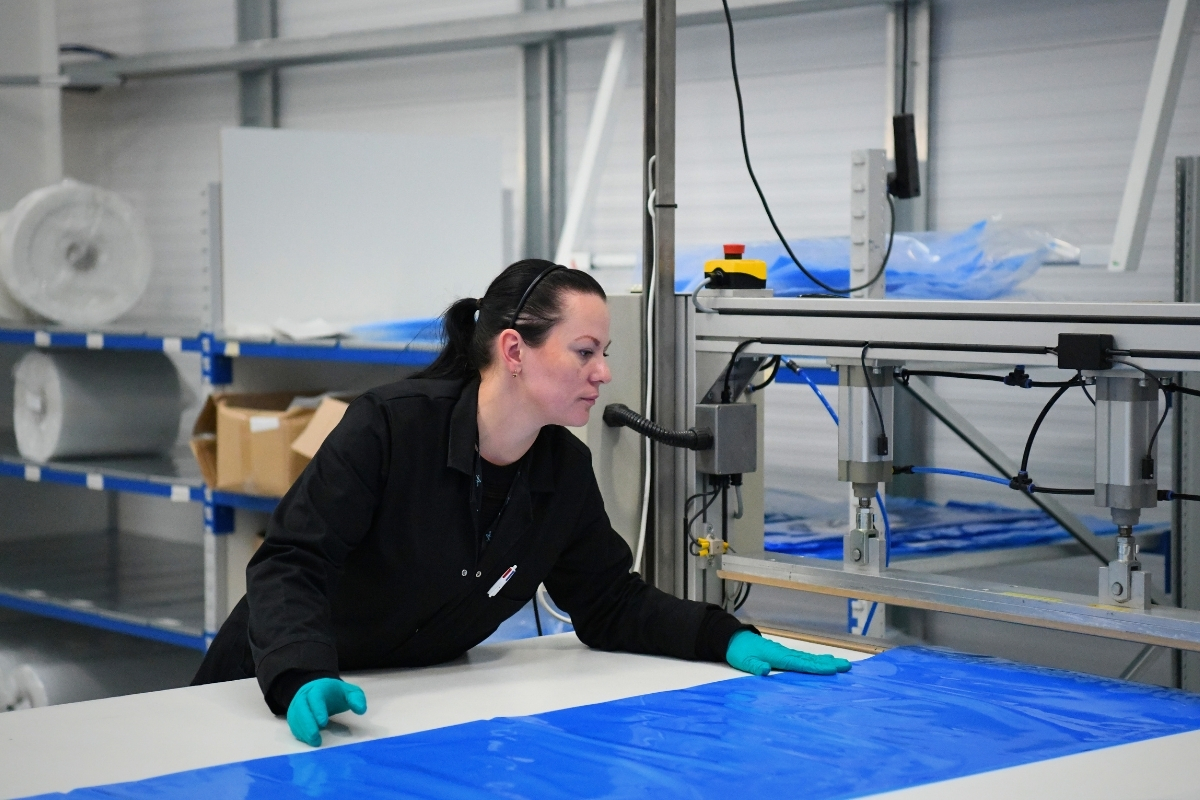
Advanced composite materials play an important role in modern aircraft manufacturing, combining high strength with low weight. Their value also makes efficient material management a significant consideration for manufacturers, particularly as global aircraft production rates increase.
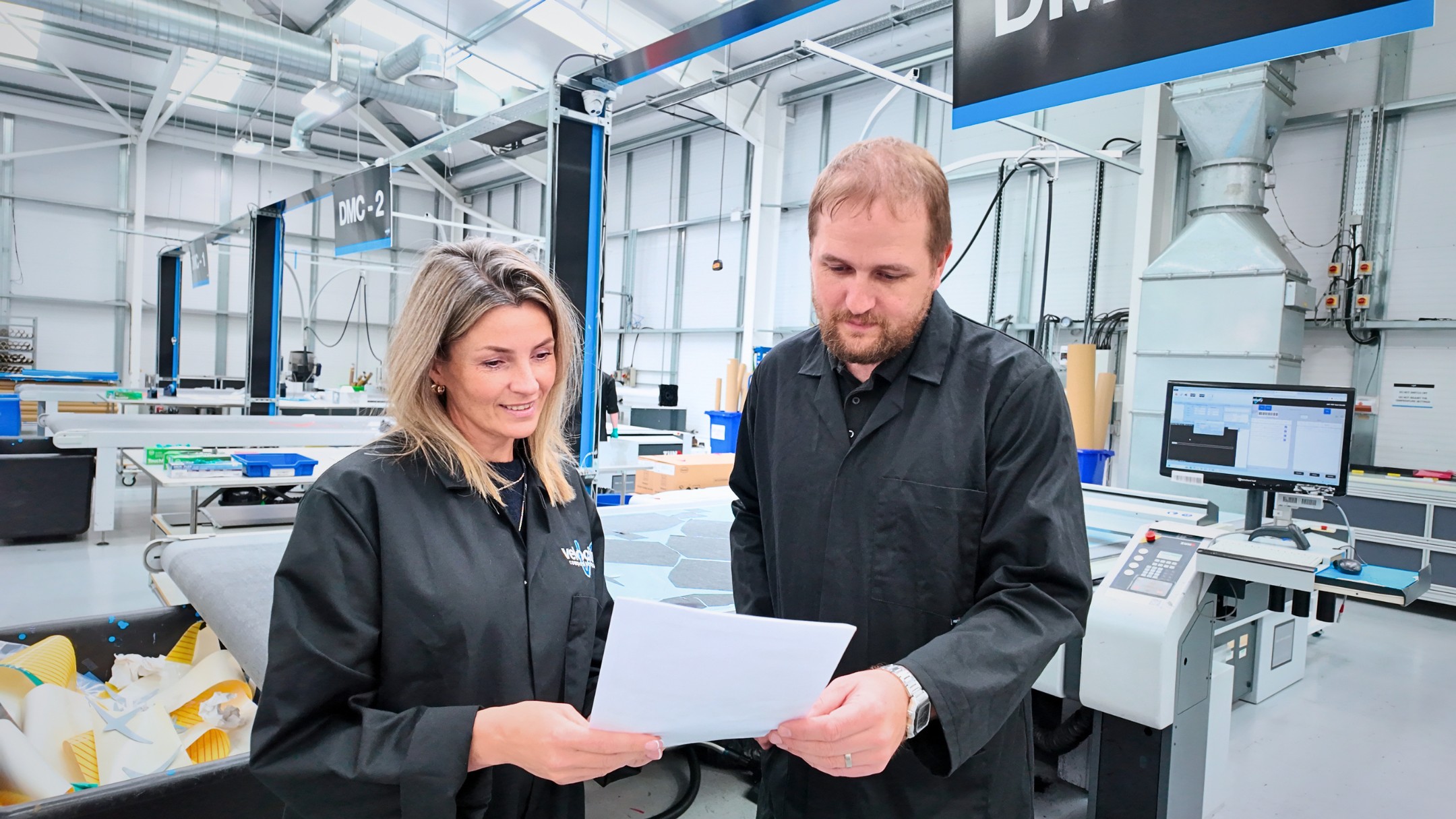
At the centre of Velocity’s approach is a process known as nesting, which involves arranging individual component shapes within a sheet or roll of composite material to achieve the most efficient cutting pattern. The principle is familiar to anyone who has seen a tailor arrange patterns on fabric. In aerospace, however, the process involves complex component geometries, specialist materials and strict requirements for traceability and material control.
Velocity uses proprietary digital technology to optimise these cutting arrangements, allowing more components to be produced from the available material while reducing the volume of offcuts generated during processing. James Eastbury, Chief Customer Officer at Velocity Composites, said the process illustrates how improvements in material efficiency can contribute directly to aerospace manufacturing performance.
“Composite materials represent a significant investment for aircraft manufacturers, so making the best possible use of every roll is commercially important. “Our nesting technology allows us to examine how individual components can be arranged and cut to maximise material utilisation. Even relatively small improvements in yield can become significant when applied across large production programmes and thousands of material kits.”
The benefits of optimised nesting extend into inventory management, where the quantity of material required, the timing of its use and the way it is supplied can influence manufacturing costs. Velocity’s business model combines precision cutting and kitting with digital material management, allowing customers to receive prepared composite material kits aligned with their manufacturing requirements.
By optimising the material required for each kit, the company can help manufacturers improve the relationship between purchased material, usable components and production demand. The approach is particularly valuable for aerospace prepreg materials, which require carefully controlled storage and handling conditions and have defined shelf-life and out-life requirements.
Efficient planning helps ensure materials are processed and supplied in line with production schedules, supporting inventory control and reducing the risk of material reaching the end of its usable life.
Eastbury explained: “There is a close relationship between material utilisation and inventory efficiency. When you understand precisely how much material is required for a production programme, you can plan purchasing, cutting and delivery with greater accuracy. “For customers, that creates opportunities to reduce the amount of material held in stock, improve inventory visibility and release working capital. It also helps production teams receive the materials they need in a format that is ready for use.”
As aerospace manufacturers prepare for higher aircraft build rates, the cumulative effect of improvements in material utilisation becomes increasingly relevant. A more efficient cutting pattern can reduce raw material consumption across repeated production cycles, while the delivery of accurately prepared kits helps streamline material handling and preparation on the factory floor.
These improvements also have an environmental dimension. Advanced composite materials are resource-intensive to manufacture, and better utilisation means a greater proportion of the material produced can be incorporated into finished components. For Velocity, the combination of proprietary technology, specialist manufacturing expertise and digital inventory management provides a practical way to support customers’ operational and sustainability objectives.
“Material efficiency is an area where technology can make a measurable difference,” added Eastbury. “When you improve the yield from composite materials and combine that with better inventory management, the benefits extend across the manufacturing process. Customers can improve cost control, make better use of valuable materials and reduce the waste associated with production.
“With the scale of aircraft manufacturing programmes today, those improvements have considerable value over the life of a programme.”
Velocity Composites operates specialist composite material kitting facilities in the UK and United States, supplying aerospace manufacturers with precision-cut materials supported by digital process control and inventory management technology.