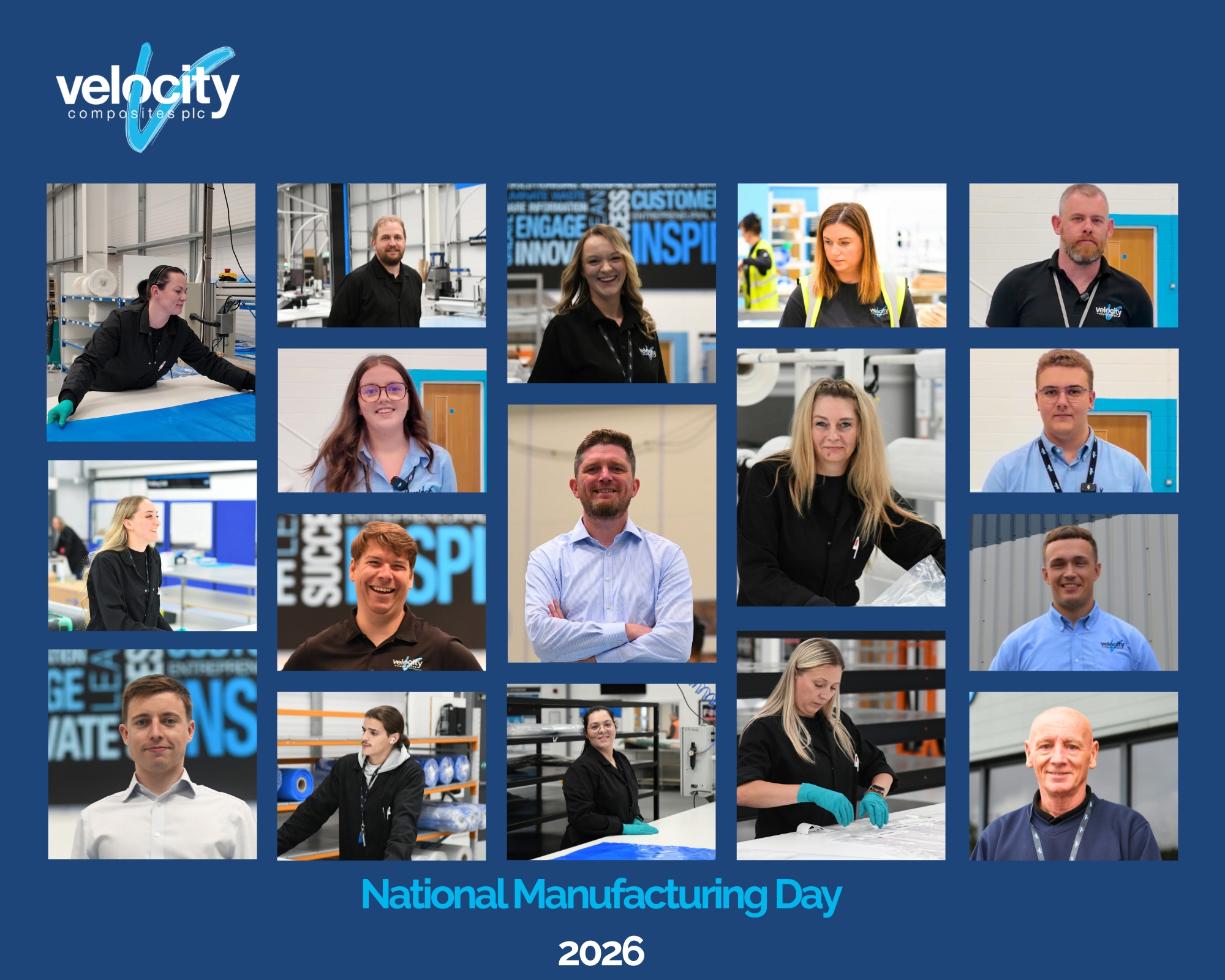
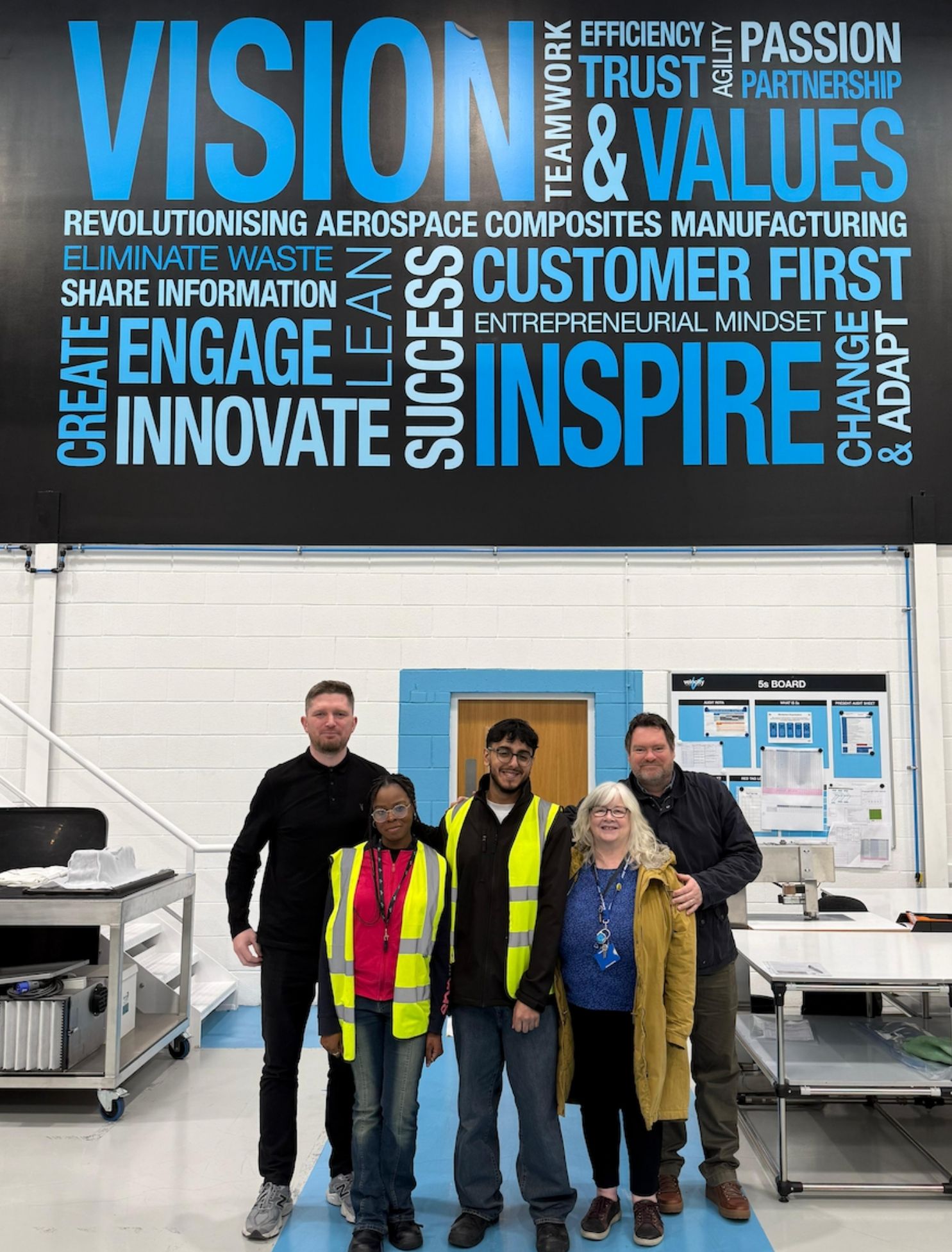
A major commitment to expand apprenticeships and work experience for young people has been welcomed by Velocity Composites, as manufacturers across the UK prepare for growing demand for skilled people.
Government and industry have announced plans to increase the number of apprenticeships within the defence sector to at least 14,000 by 2035, alongside a 25% expansion in work experience and employment pathways for young people. The wider initiative aims to create 40,000 skilled career opportunities a year by 2030, rising to 50,000 by 2035. For Velocity Composites, the significance reaches across the wider advanced manufacturing economy.
The Burnley-headquartered aerospace technology business believes sustained investment in apprenticeships and technical education will be increasingly important as aerospace production rates rise and manufacturers throughout the supply chain compete for engineering and manufacturing skills. Operations Director Oliver Smalley said creating clearer routes from education into industry gives young people an opportunity to build careers while helping manufacturers develop the capabilities required for the years ahead.
“Apprenticeships are one of the most effective ways of bringing the next generation into manufacturing because people are learning in the environment where those skills will ultimately be used,” said Smalley. “Young people get practical experience, recognised qualifications and an understanding of how modern manufacturing businesses operate. Employers have the opportunity to develop people around the technologies, processes and standards that are shaping their industry.
“That investment becomes increasingly important as demand grows across aerospace and advanced manufacturing.”
The skills challenge is becoming closely connected with the production challenge facing UK industry. Aircraft manufacturers are working towards higher build rates, bringing additional requirements throughout their supply chains. Composite materials, precision engineering, digital manufacturing and production technology all depend upon people with increasingly specialised skills.
That creates opportunities for a new generation entering manufacturing at a time when factories themselves are changing. Modern aerospace production combines engineering knowledge with automation, digital systems, data, materials science and tightly controlled manufacturing processes. For employers, apprenticeships provide a route to introduce people to that environment early in their careers and develop their skills through practical experience.
“The perception of manufacturing among young people matters,” Smalley added. “There is a huge range of careers available today, from engineering and production through to digital technology, quality, supply chain and operations. “Aerospace in particular gives young people the chance to work in an industry with a global reach and some exceptionally advanced technology. We need to make those opportunities visible and give people practical routes into them.”
The latest government initiative includes a commitment from participating businesses to increase career, STEM and community engagement by 25% by 2035, alongside the expansion of apprenticeships and work experience. That early contact with industry could prove particularly valuable for the wider manufacturing supply chain.
For companies such as Velocity Composites, workforce development sits alongside investment in technology and production capability as aerospace manufacturers prepare for long-term growth in aircraft output. The company specialises in advanced composite material kits and supply chain solutions for aerospace manufacturers, with operations in the UK and United States. Its work places it within a global aerospace supply chain where productivity, material efficiency and production resilience are becoming increasingly important as volumes increase.
Smalley believes the response to that growth needs to include sustained investment in people.
“Manufacturing capacity ultimately comes down to having capable people alongside the right technology,” he said. “As an industry, we have an opportunity to show young people what a career in modern manufacturing can offer and then give them the training and experience to build that career. “The demand for skills is going to continue as aerospace production grows. Developing those skills here in the UK will help companies throughout the supply chain participate in that growth.
“Apprenticeships are an investment that can pay back over an entire career. The more opportunities we create for young people to enter engineering and manufacturing, the stronger the skills base available to British industry will become.”