As aerospace manufacturers increase production rates across major programmes, the ability to manage advanced composite materials with precision, visibility and consistency is becoming an increasingly important part of supply chain performance.
For Velocity Composites plc, continued investment in digital manufacturing is helping create the infrastructure required to support that growth.
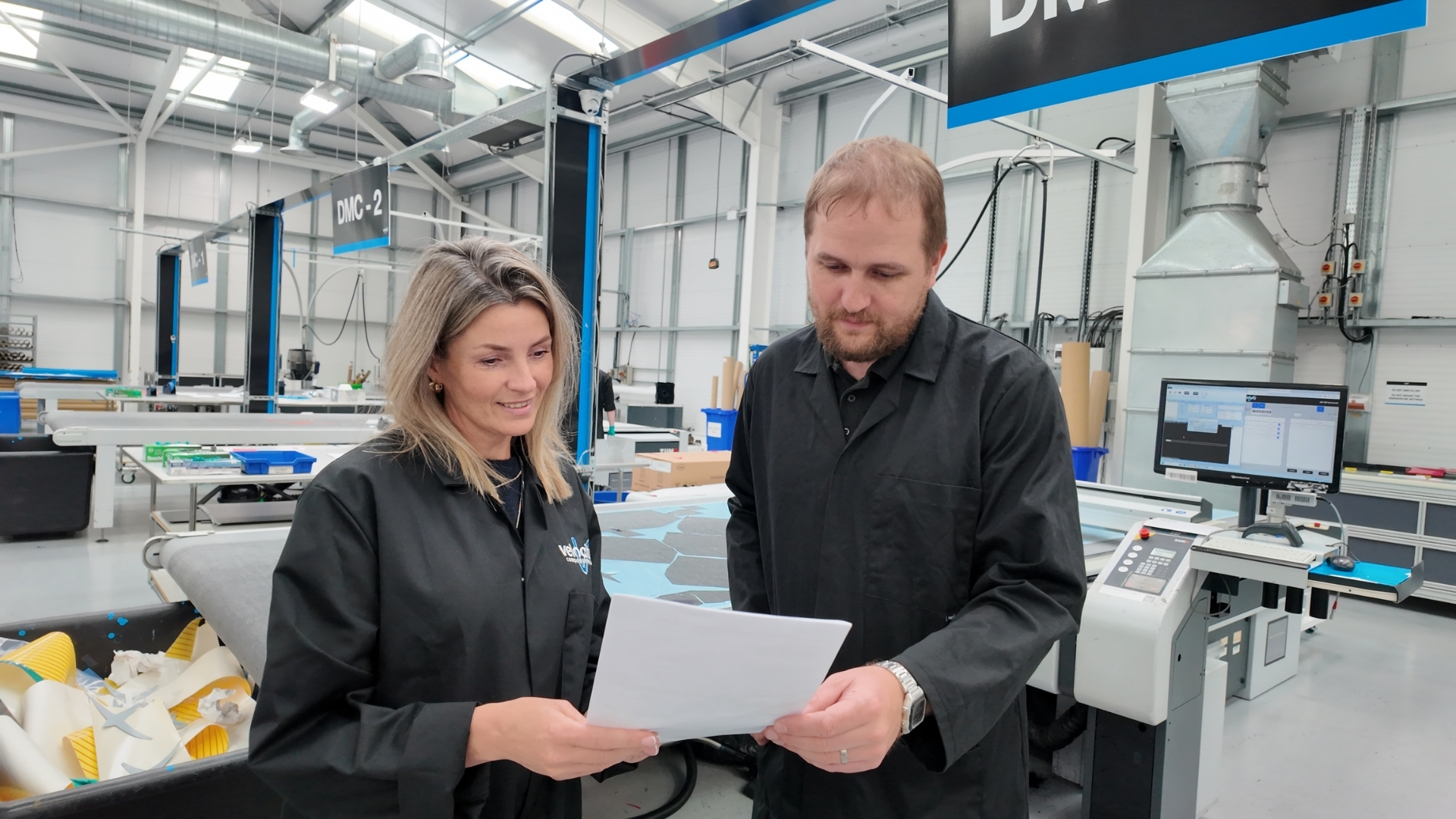
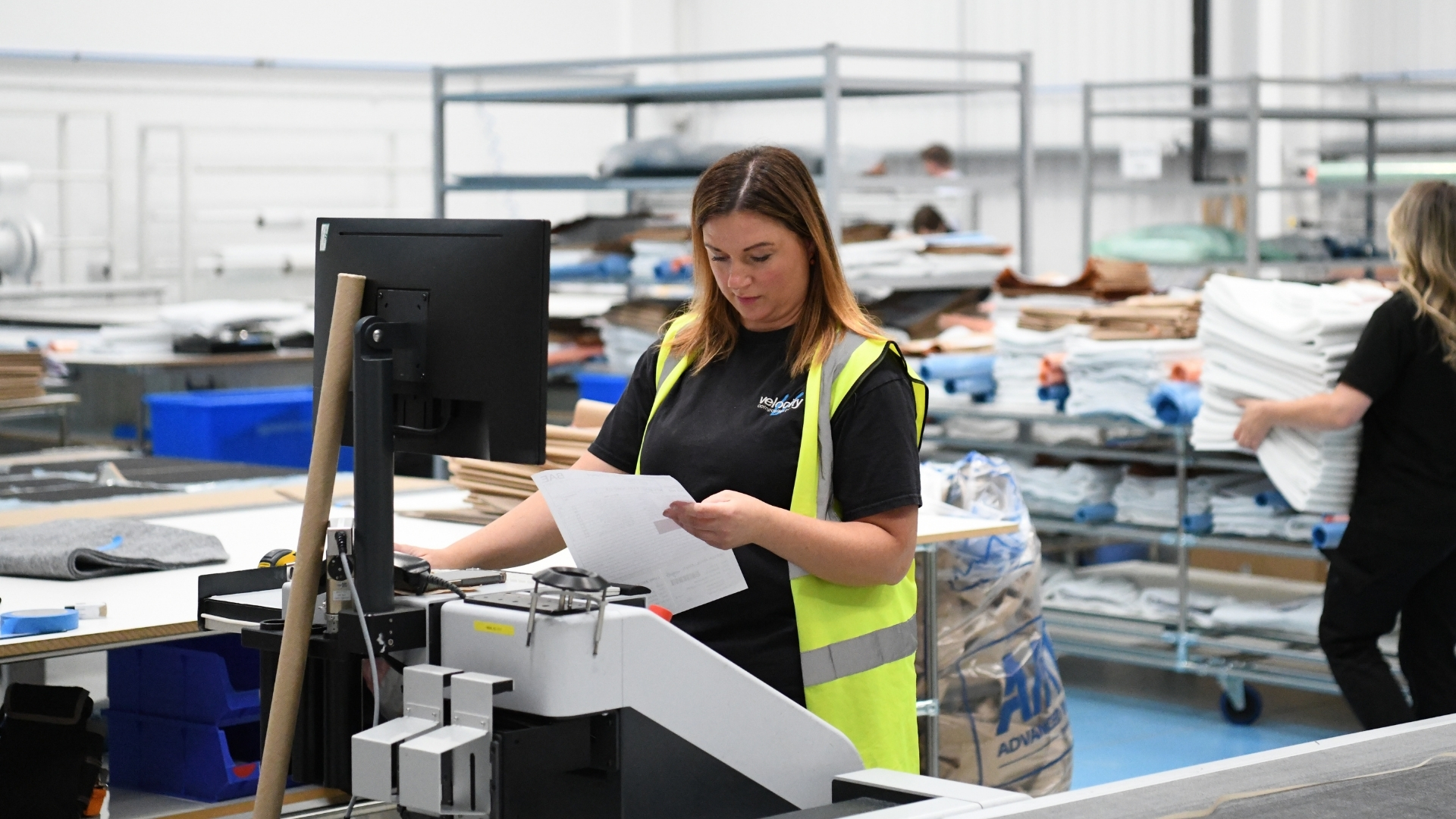
The Burnley-headquartered aerospace composites specialist has developed proprietary digital manufacturing capabilities that bring together material traceability, production control, advanced nesting and data-led processing within a highly controlled manufacturing environment.
At the heart of the approach is Velocity’s fully digital, in-house manufacturing cell, developed to improve the way complex composite material kits are manufactured and managed across multiple aerospace programmes.
The technology provides full batch traceability throughout the manufacturing process, giving Velocity detailed visibility over materials as they progress from inventory through conversion and into engineered kits ready for customer production.
James Eastbury, Chief Customer Officer at Velocity Composites, said the increasing sophistication of aerospace manufacturing is placing greater value on the quality and availability of supply chain data.
“Digital manufacturing gives us a level of visibility and control that is extremely valuable when managing complex aerospace programmes,” said Eastbury.
“Our customers require precision, traceability and consistency at scale. By connecting material management with manufacturing data, we can support those requirements while continually improving the efficiency of the overall process.”
Composite materials represent some of the most technically advanced and valuable consumables used within modern aircraft manufacturing.
Velocity’s digital manufacturing model allows material requirements to be analysed across different kits and, where specifications permit, grouped to create more sophisticated nesting strategies.
Components can be arranged intelligently across available material, enabling a greater proportion of each roll or sheet to become productive aircraft content.
The commercial and environmental benefits extend through the supply chain. Improved material utilisation supports lower consumption, reduces the volume of residual material and helps customers maximise the value generated from high-performance composites.
This increasingly connects Velocity’s digital manufacturing strategy with the aerospace industry’s wider sustainability ambitions.
Eastbury continued:
“Material efficiency starts with having the right information. When you understand demand, specification, inventory and manufacturing requirements at a detailed level, you can make much more informed decisions about how material is allocated and processed.
“That creates value for customers through greater efficiency while supporting the wider objective of making the aerospace supply chain increasingly sustainable.”
Digital traceability also plays an important role in maintaining control over materials with specific handling, storage and shelf-life requirements.
Velocity’s systems enable material batches and production activity to be tracked throughout the manufacturing cycle, creating a connected digital record that supports both operational management and customer requirements.
Processing speed can also be optimised through the digital manufacturing environment, allowing materials to progress efficiently through production while maintaining the controls required for aerospace applications.
For manufacturers operating large and increasingly complex programmes, this combination of physical manufacturing capability and digital intelligence provides another layer of supply chain visibility.
Velocity sees that capability becoming increasingly valuable as aircraft manufacturers and their supply chains prepare for sustained production growth.
The company has also developed its digital manufacturing model with scalability in mind.
Standardised processes, manufacturing data and proprietary technology provide a framework that can be replicated as Velocity develops its operations and supports customers across international locations.
That creates the potential for customers to access a consistent approach to composite material management across multiple programmes and geographies.
“Scalability is an important part of what we have developed,” Eastbury added.
“The objective is to combine our knowledge of composite materials with technology and repeatable manufacturing processes that can support customers wherever their programmes require us to operate. It gives us a strong platform for future growth.”
Velocity’s proposition increasingly extends beyond the physical manufacture of composite kits.
Through the integration of procurement, material management, digital manufacturing, engineered kitting, logistics and supply chain expertise, the company is creating a connected model designed around the requirements of modern aerospace production.
As build rates increase, that ability to turn material, manufacturing processes and data into a coordinated supply chain capability is set to become increasingly valuable.
For Velocity Composites, digital manufacturing is helping provide the foundation: improving material utilisation, strengthening traceability and creating a scalable manufacturing model capable of supporting the next generation of global aerospace production.