
As the aerospace sector accelerates its transition towards more sustainable manufacturing, Velocity Composites plc is positioning itself at the centre of that evolution—combining advanced digital technology, engineered material kits and end-to-end supply chain integration to reduce waste, improve efficiency and support cleaner production.
Headquartered in the UK and operating globally, Velocity Composites has built its proposition around a simple but powerful idea: that better control of materials, processes and data can unlock both environmental and commercial gains across the aerospace manufacturing lifecycle.
At the heart of its offering is a fully integrated service model, spanning engineering, procurement, kitting, logistics and on-site support. Rather than acting as a traditional supplier, the company embeds itself within customer operations—designing bespoke kitting configurations at the earliest stages of programme development and managing them throughout the lifecycle of production.
James Eastbury, Chief Customer Officer at Velocity Composites plc, said this early engagement is critical to driving sustainable outcomes.
“True sustainability in aerospace manufacturing starts long before a part reaches the shop floor,” he said. “By working with customers at the development phase, we can design material kits and service models that reduce waste, optimise processes and improve repeatability from day one.”
Engineering Out Waste
Velocity’s engineered kitting solutions are designed to eliminate one of the most persistent inefficiencies in composite manufacturing: excess material handling and cleanroom waste.
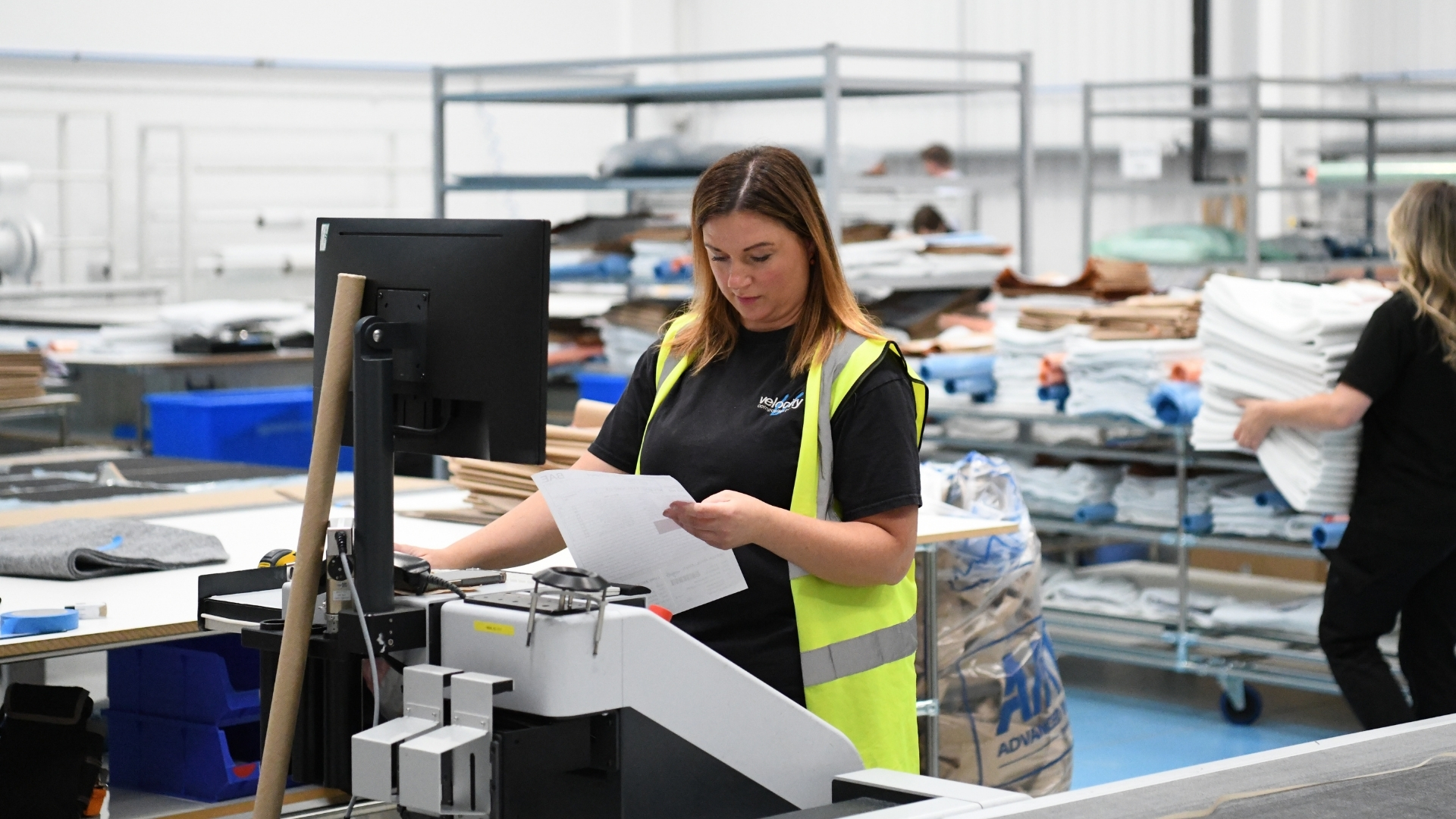
Through detailed tool and process audits, the company captures each customer’s build requirements before developing pre-configured kits that include everything from simple cut shapes to complex 3D vacuum bag assemblies. These kits arrive ready for use, significantly reducing manual preparation time and operator variability.
The result is a more controlled, repeatable manufacturing process—where material usage is optimised, scrap is reduced, and production becomes less dependent on individual skill levels.
“Composite manufacturing has historically involved a high degree of manual intervention, which introduces both variability and waste,” Eastbury explained. “Our kitting approach removes that uncertainty, creating a more consistent process that benefits both productivity and sustainability.”
Digital Technology at the Core
A defining feature of Velocity’s model is its investment in proprietary digital technology, enabling real-time visibility and control across the entire supply chain.
The company operates a network of digital manufacturing cells, supported by automated cutting systems developed in partnership with Zund Systemtechnik AG and driven by its own software platforms.
Systems such as Hypernest™ and VRP™ integrate material nesting, production planning and logistics into a single digital environment, while RFID tracking and real-time monitoring ensure full traceability—from raw material source through to final kit delivery.
This level of digital integration not only improves efficiency but also supports sustainability by minimising over-ordering, reducing material exposure and ensuring optimal use of high-value composites.
“We are digitising the entire material lifecycle,” said Eastbury. “That means better forecasting, less waste, improved traceability and ultimately a more sustainable supply chain for our customers.”
End-to-End Supply Chain Control
Beyond the factory floor, Velocity’s capabilities extend deep into supply chain and demand management—an increasingly critical area as aerospace manufacturers contend with long lead times and fluctuating production rates.
The company manages raw material procurement, supplier performance and inventory levels in line with customer demand profiles, ensuring materials are available when needed while avoiding excess stock and obsolescence.
Temperature-controlled logistics, on-site customer support and integrated delivery scheduling further strengthen the model, helping customers achieve consistent on-time, in-full performance while reducing environmental impact.
Quality, Compliance and Programme Assurance
Operating in one of the most highly regulated manufacturing environments, Velocity maintains industry-leading accreditations including AS9100, AS9120 and Nadcap kitting certification.
These standards underpin a rigorous approach to quality assurance, configuration control and traceability—ensuring that sustainability improvements do not come at the expense of compliance or performance.
The company also applies structured programme management processes, working closely with customers through gated project lifecycles and regular performance reviews to drive continuous improvement.
Enabling the Next Generation of Aerospace Manufacturing
With aerospace OEMs and Tier 1 suppliers under increasing pressure to reduce emissions, improve efficiency and demonstrate supply chain transparency, Velocity’s model is gaining traction as a scalable solution.
By combining engineering expertise, digital infrastructure and supply chain integration, the company is helping manufacturers transition towards more sustainable production without compromising on quality or delivery.
Eastbury believes this integrated approach will become essential as the industry evolves.
“Sustainability is a fundamental part of how aerospace programmes are designed and delivered,” he said. “Our role is to give customers the tools, data and processes they need to achieve that, while also improving performance across their operations.”
As the sector looks to balance growth with environmental responsibility, Velocity Composites is demonstrating that smarter materials management and digital manufacturing can play a pivotal role in shaping a more sustainable future for aerospace.