With the aerospace sector grappling with production ramp-ups and persistent skills shortages, the importance of developing the next generation of talent is rising sharply up the industry agenda. For Velocity Composites plc, that challenge is closely tied to how effectively the sector can attract, train and retain young people with the right technical and professional capabilities.
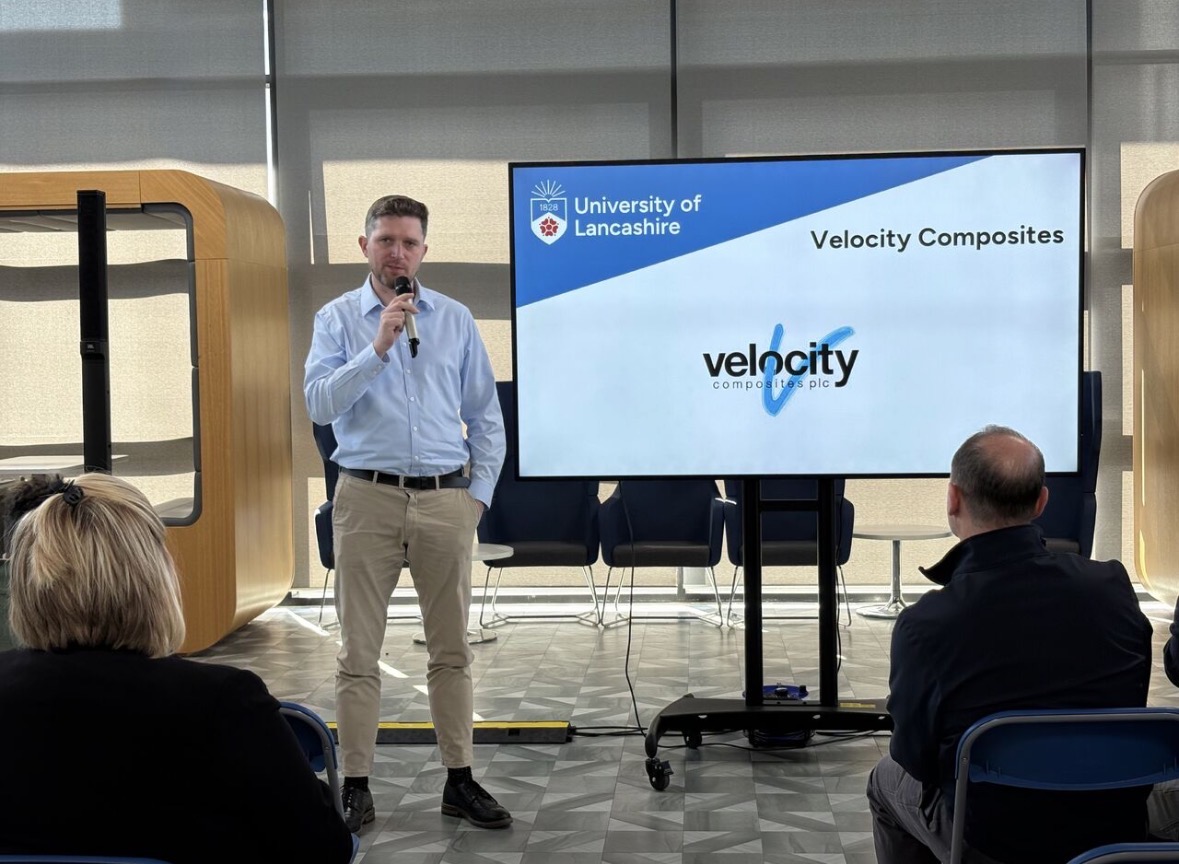
Speaking at the latest SPARK apprenticeship matchmaking event hosted by University of Lancashire, Chief Operating Officer Oliver Smalley set out why initiatives that bring education and industry closer together are becoming increasingly critical—not just for individual businesses, but for the long-term resilience of UK manufacturing.
The SPARK event, designed as a fast-paced “speed interview” platform, connects employers with prospective degree apprentices through short, high-impact conversations. The format is intended to accelerate recruitment while giving candidates a direct opportunity to demonstrate their potential beyond traditional CV-based processes. For Smalley, the value of the event lies in its ability to create meaningful, real-world engagement between employers and emerging talent.
“Events like SPARK demonstrate what can happen when industry and education align around a shared purpose,” he said. “They create tangible pathways into careers and give young people the confidence to step into sectors like aerospace and advanced manufacturing.”
Building capability for a composites-driven future
The emphasis on apprenticeships is particularly relevant for the composites sector, where manufacturing processes are evolving rapidly alongside increased demand for lightweight, high-performance materials in modern aircraft. As composite content continues to grow across both commercial and defence platforms, the need for skilled operators, engineers and technicians is intensifying. Unlike more traditional manufacturing disciplines, composites production requires a blend of material science understanding, precision handling and process control—skills that are often best developed through structured, hands-on learning.
“Apprenticeships are essential to building that capability,” Smalley noted. “They allow individuals to learn in a real production environment while developing the technical and professional skills that the industry needs. For companies like Velocity, that’s critical to sustaining growth and maintaining quality as production scales.”
The challenge, he suggested, is not just about filling vacancies, but about creating long-term career pathways that can support the industry’s future requirements.
Confidence and ambition on display
According to Martin Blunt, who leads enterprise engagement at the university, the latest SPARK event demonstrated the effectiveness of that approach. More than 100 candidates were shortlisted for further interviews, with several securing degree apprenticeship offers on the day—a reflection, he said, of both the quality of candidates and the appetite from employers.
“The professionalism, confidence and determination shown by learners was exceptional,” Blunt commented. “This is about more than recruitment—it’s about opening doors and ensuring talent is recognised and supported.”
That sentiment was echoed by participating employers, many of whom are increasingly looking beyond traditional hiring routes to secure future skills. Degree apprenticeships, in particular, are gaining traction as a way to combine academic learning with practical experience, reducing onboarding time and improving retention.
Industry engagement seen as critical by Velocity
For Velocity Composites, participation in initiatives like SPARK forms part of a broader commitment to supporting the UK’s manufacturing talent pipeline. The company, which supplies engineered composite material kits to major aerospace manufacturers, operates at a point in the supply chain where efficiency, consistency and process discipline are paramount. Ensuring a steady flow of skilled individuals into the sector is therefore not just a social responsibility, but a commercial necessity.
“Engagement has to start early,” Smalley said. “If we want a strong, competitive aerospace sector in the UK, we need to invest in the people who will deliver it. That means supporting events like this, working closely with education providers, and showing young people what a career in manufacturing can offer.”
A collaborative model for skills development
The SPARK model itself reflects a growing recognition that collaboration between academia and industry is essential to addressing the skills gap. By creating a structured but informal environment where employers and candidates can interact directly, the event shortens recruitment cycles while improving alignment between business needs and individual aspirations. For the University of Lancashire, the goal is clear: to build accessible pathways into employment and ensure that local and regional employers can tap into emerging talent.
For industry partners like Velocity Composites, the benefit is equally tangible—early access to motivated individuals who are ready to develop within the sector. As aerospace continues its recovery and growth trajectory, the success of such initiatives may prove increasingly important.
“The future of our industry depends on the decisions we make today around skills and talent,” Smalley concluded. “Events like SPARK are a powerful example of how we can get that right.”