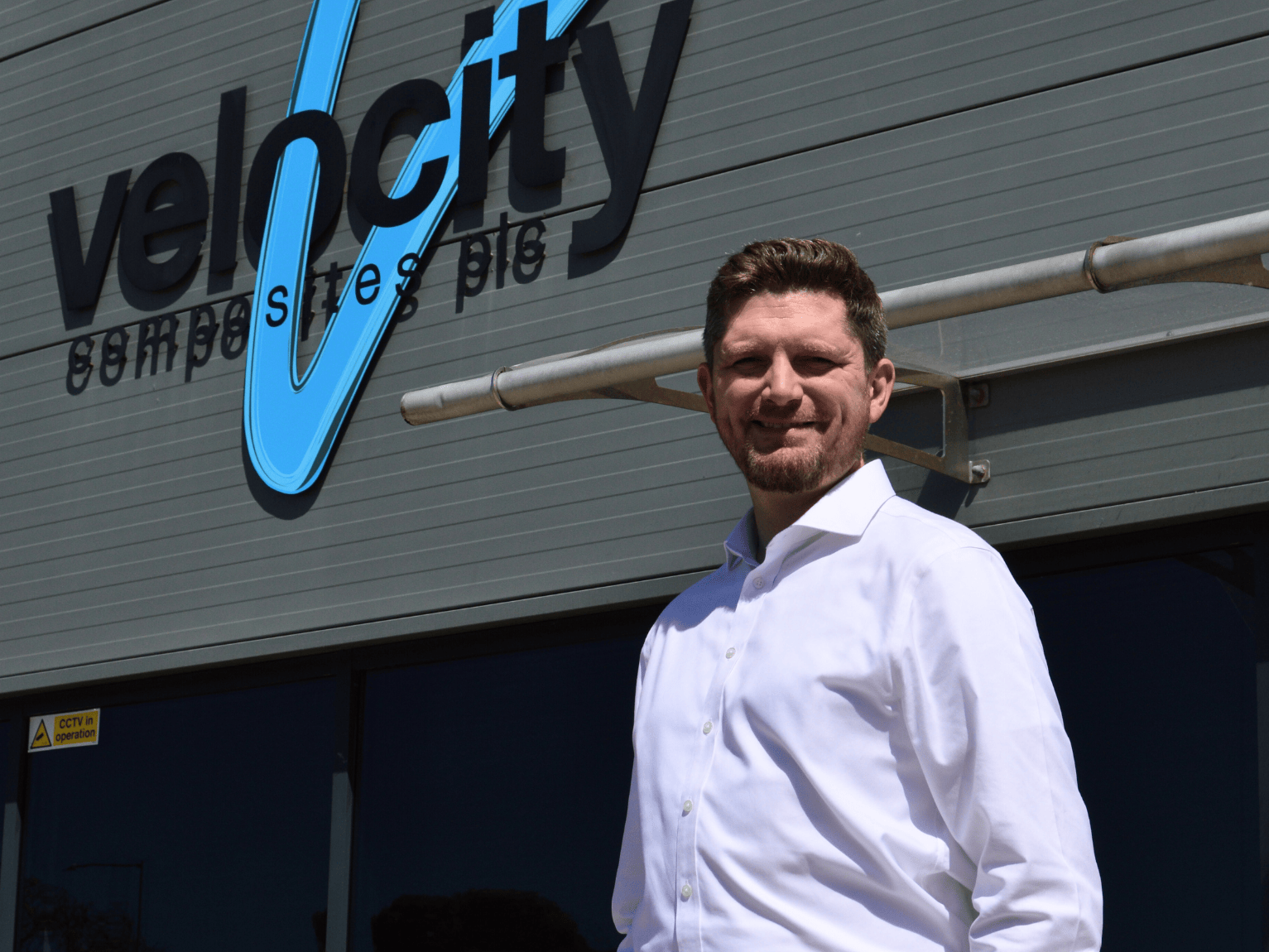
The company, a leading supplier of advanced composite material kits to the aerospace industry, is supporting the T-Level pathway as part of its wider approach to developing people and building the skills required by modern aerospace manufacturing. Chief Operating Officer Oliver Smalley believes the combination of technical education and meaningful industry experience can provide young people with a powerful starting point for a career.
“September is naturally a time when young people start thinking about the subjects they enjoy, the skills they want to develop and ultimately where those choices could take them,” said Smalley.
“Aerospace offers an extraordinary range of opportunities. You can be working with advanced carbon fibre materials, digital manufacturing technology, engineering processes and quality systems that ultimately contribute to aircraft operating around the world. T-Levels give students an opportunity to see that environment first-hand and understand how their education translates into a real career.”
Combining the Classroom with the Factory Floor
T-Levels are two-year Level 3 qualifications equivalent to three A-Levels, combining classroom-based technical learning with substantial experience in the workplace. For manufacturing and engineering students, the curriculum can encompass engineering materials and their properties, mathematics, design, manufacturing processes and business awareness, alongside specialist disciplines including machining, fitting and assembly, fabrication and welding, and composites manufacturing.
The industry placement element gives students the opportunity to apply that knowledge within a professional manufacturing environment and develop an understanding of the standards, teamwork and processes behind modern industry. For Velocity, those skills have direct relevance.
The company specialises in the management, cutting, kitting and supply of advanced composite materials, supporting major aerospace manufacturers through digitally controlled processes designed around material efficiency, traceability, quality and repeatability. Its operations bring together advanced composite materials, digital manufacturing systems, engineered kitting, supply chain management, quality control and continuous improvement, creating a working environment in which technical and practical skills are closely connected.
Smalley, who has almost 15 years of aerospace experience across composites and metallic manufacturing, sees exposure to these environments as an important part of inspiring the next generation.
“Manufacturing today is an increasingly sophisticated career,” he said. “There is technology, engineering, data, automation, materials science, quality and continuous improvement running throughout an aerospace operation.
“For a young person coming into that environment, there are opportunities to build specialist technical expertise and then continue developing into engineering, operational, quality and leadership roles. A T-Level can be the beginning of a much longer career journey.”
Building Skills for Aerospace Growth
The development of technical skills is becoming increasingly important as the aerospace sector expands production and manufacturers invest in the people, technology and capacity required to support long-term aircraft programmes. Advanced composites form an increasingly important part of modern aerospace manufacturing, helping aircraft manufacturers deliver lightweight, efficient and high-performance structures.
Velocity sits within that supply chain, converting specialist raw materials into carefully prepared kits ready for customers’ manufacturing processes. The work demands precision, material knowledge, process control, traceability and consistent quality, making the development of skilled manufacturing teams central to the company’s growth strategy.
“Building high-performing teams is fundamental to our success,” Smalley said. “T-Levels allow businesses such as Velocity to play an active role in developing the skills of the future workforce, combining theoretical knowledge with practical experience inside an advanced manufacturing environment.
“That experience can be incredibly valuable. Students get to understand the standards expected in aerospace, work alongside experienced people and begin building the technical and professional skills that can support them throughout their careers.”
A Career Path with Global Potential
The opportunity also extends well beyond an individual production role. Velocity Composites operates from facilities in the UK and United States, serving customers in a global aerospace market. As the company develops its international manufacturing capability, creating a sustainable pipeline of skilled people forms an important part of supporting that growth.
Smalley added: “Having been involved in scaling manufacturing operations and establishing new facilities, I have seen how important skilled people are to successful growth.
“T-Levels provide a direct connection between education and industry. By giving young people meaningful exposure to manufacturing, we can help develop the skills base that supports our future expansion while introducing students to careers they may never previously have considered.
“For somebody choosing their next step this September, aerospace manufacturing can offer the chance to work with advanced technology, develop highly transferable skills and contribute to a genuinely global industry. We want more young people to see that opportunity.”
For Velocity, supporting technical education is therefore about more than filling future roles. It is an opportunity to strengthen the connection between schools, colleges and industry and to demonstrate what a career in modern British manufacturing can look like. As another academic year begins, the message from the aerospace manufacturer is simple: the route from the classroom to a career helping build the future of flight may be closer than many students realise.