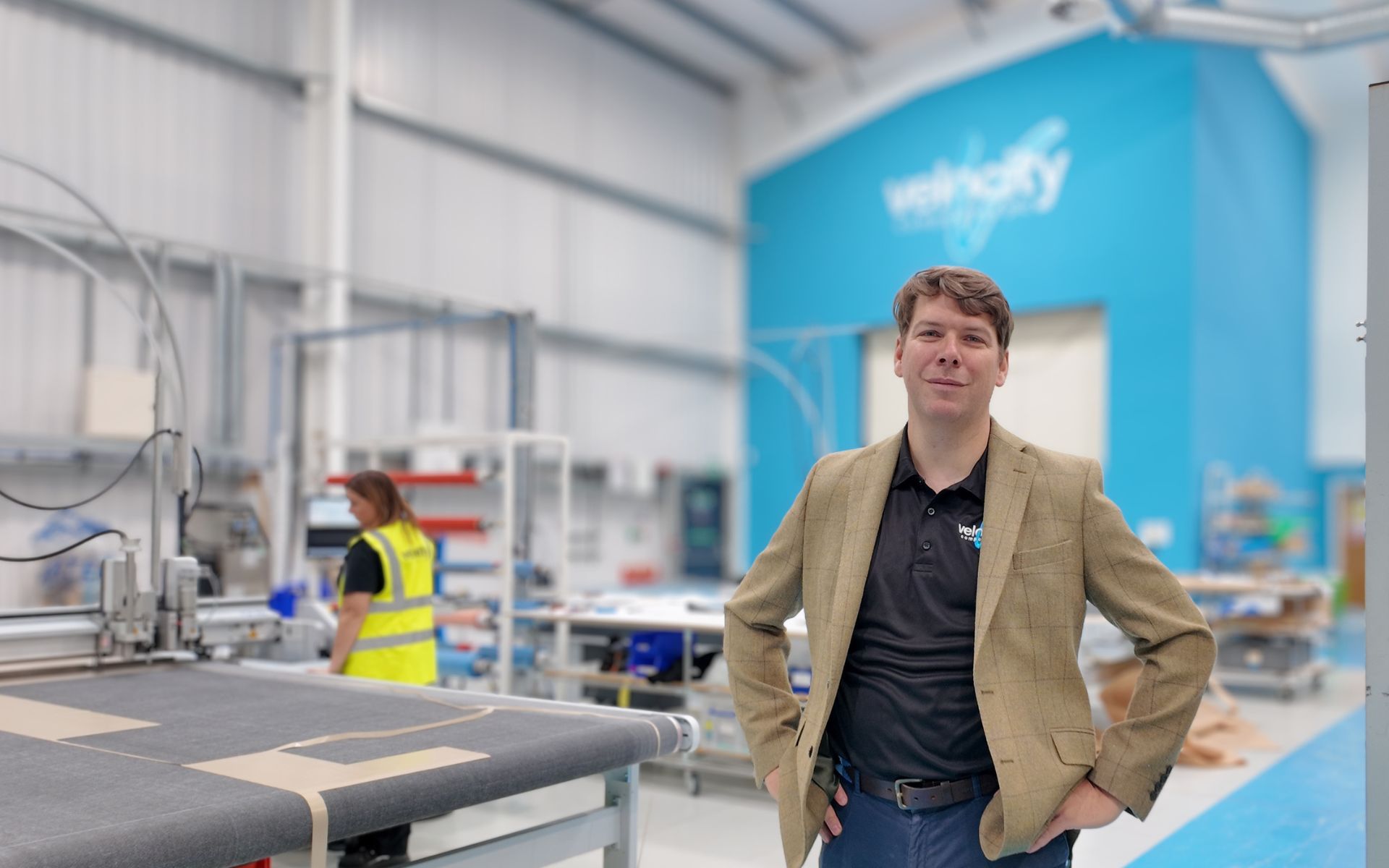
As aerospace manufacturers increase production while pursuing ambitious sustainability targets, attention is shifting beyond aircraft design towards the efficiency of the supply chain itself. Manufacturers are recognising that significant environmental and commercial gains can be achieved not only by reducing material waste, but by changing how composite materials are purchased, managed and delivered.
For Burnley-headquartered Velocity Composites plc, sustainability is increasingly being driven through digital supply chain management, engineered kitting and inventory optimisation that allows manufacturers to hold less stock while making better use of every kilogram of high-value composite material.
Rather than simply supplying materials, Velocity works alongside major aerospace OEMs and Tier One manufacturers to manage the complete lifecycle of composite materials. Its integrated approach spans procurement, digital inventory management, engineered kitting, logistics and on-site support, creating a connected supply chain that improves both operational performance and environmental outcomes.
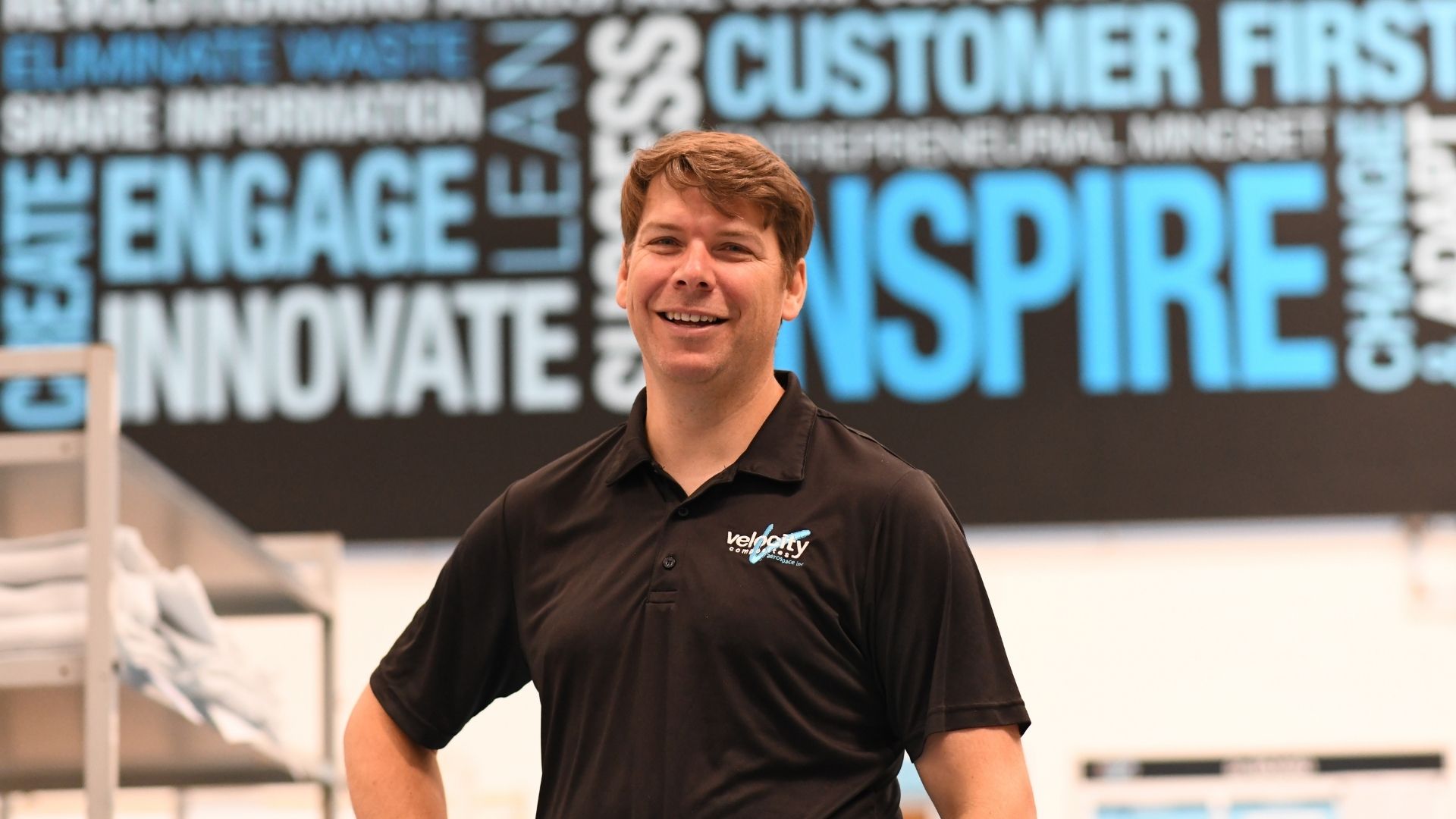
James Eastbury, Chief Customer Officer at Velocity Composites, believes the greatest sustainability gains often come before production even begins.
“Sustainability is about creating a smarter supply chain that gives customers access to the right material at exactly the right time, without tying up unnecessary inventory or creating avoidable waste throughout the manufacturing process.”
Composite materials represent some of the highest-value consumables within aerospace manufacturing. Traditionally, many manufacturers have carried significant inventory to protect production schedules against uncertain demand and long material lead times. While understandable, this approach increases storage requirements, raises the risk of material expiry and ties up considerable working capital.
Velocity’s digitally managed supply chain is designed to remove much of that burden. Using proprietary software platforms alongside integrated planning systems, the company maintains visibility across customer demand, supplier schedules and inventory levels in real time. Materials are procured, converted into engineered kits and delivered precisely when required, allowing customers to reduce stockholding without compromising production continuity.
Eastbury says this approach delivers both financial and environmental benefits.
“Reducing inventory to Velocity is seeing that material that doesn’t sit unnecessarily in storage represents less energy used for controlled storage environments, less transport, less handling and a lower risk of valuable material reaching the end of its usable life before it’s ever put onto an aircraft.”
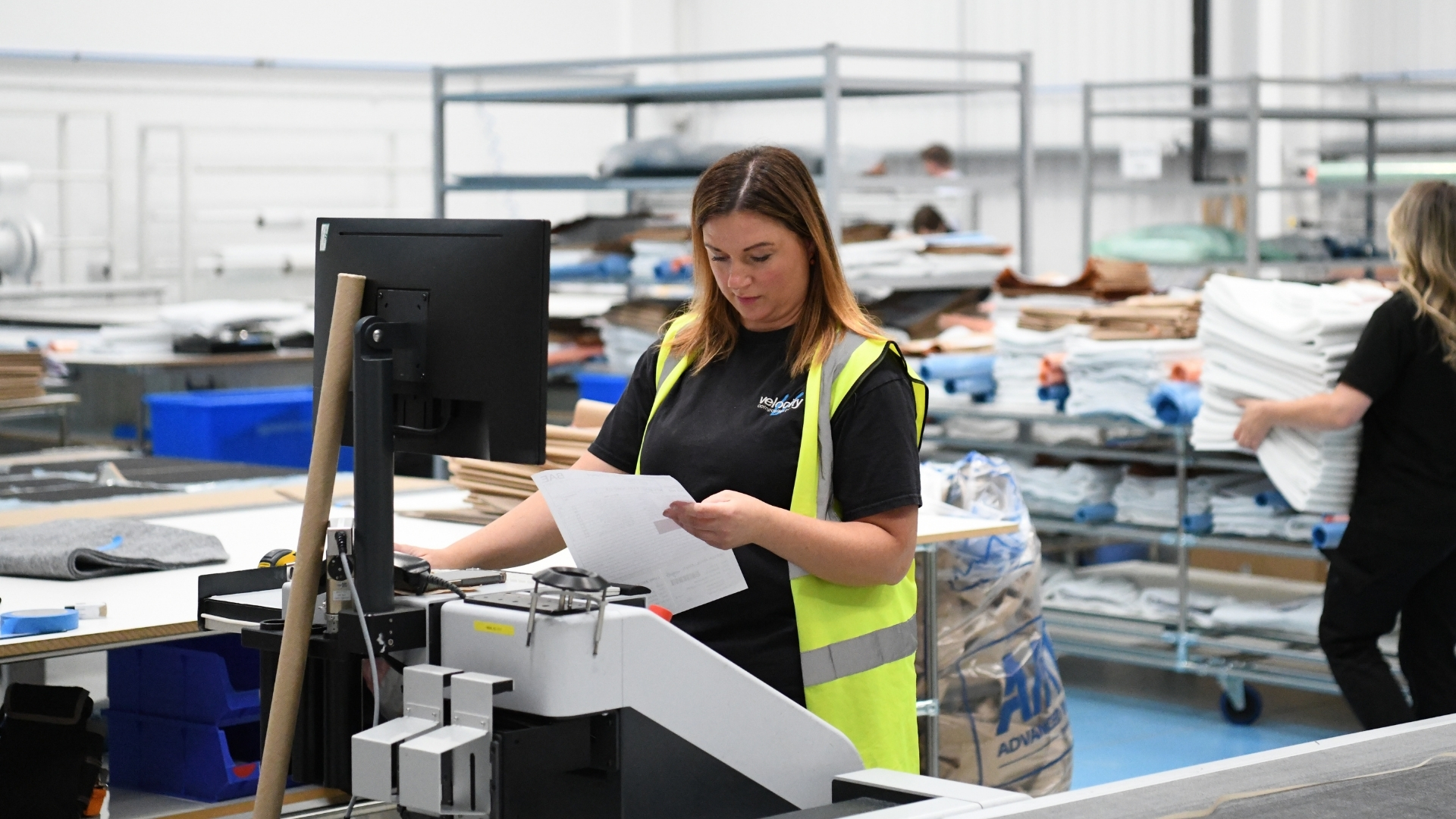
The company’s engineered kitting capability further supports these objectives by transforming raw composite materials into production-ready kits tailored to individual aircraft programmes and manufacturing processes. Each kit contains exactly the material required for a specific assembly, removing much of the manual preparation traditionally carried out within customer cleanrooms. This reduces operator handling, improves repeatability and significantly cuts scrap generated during production.
Digital manufacturing technologies developed by Velocity further optimise material utilisation. Advanced nesting software analyses cutting patterns across multiple programmes, enabling material layouts that maximise yield while maintaining full traceability throughout the manufacturing process.
The result is less unused material, fewer offcuts and improved consistency across production. Beyond manufacturing efficiency, Velocity’s integrated logistics model also contributes to lower environmental impact. Temperature-controlled transport, coordinated delivery scheduling and on-site inventory management reduce unnecessary freight movements while ensuring sensitive composite materials remain within specification throughout the supply chain. Customers benefit from reliable material availability without maintaining excessive local inventory.
As aerospace production rates continue to increase across commercial and defence programmes, this integrated approach is becoming increasingly valuable. Manufacturers face growing pressure to improve sustainability while simultaneously increasing throughput, maintaining quality and managing costs. Better visibility across material flows allows organisations to respond more effectively to changing production schedules while avoiding the waste associated with over-ordering or obsolete stock.
Eastbury believes digital connectivity is becoming fundamental to modern aerospace manufacturing.
“The more visibility customers have across their materials, inventory and production schedules, the more informed decisions they can make. Digital supply chain management allows sustainability and operational performance to work together rather than competing with one another.”
Velocity’s approach is underpinned by internationally recognised aerospace quality standards, including AS9100, AS9120 and Nadcap accreditation, ensuring that improvements in sustainability are achieved alongside the traceability, compliance and process control demanded by the aerospace sector. With aircraft manufacturers increasingly seeking partners capable of supporting both production growth and environmental objectives, Velocity Composites is demonstrating how digitally connected supply chains, engineered material kits and intelligent inventory management can deliver measurable improvements across the entire manufacturing lifecycle.
As sustainability becomes embedded within every stage of aerospace production, smarter materials management is proving to be just as important as advances in aircraft technology itself.