
Burnley-based Velocity Composites plc will return to Paris this March to exhibit at JEC World 2026, the global composites industry’s flagship event, highlighting how digital material control and outsourced kitting are helping aerospace manufacturers manage rising composite demand.
The company will showcase its capabilities on the Composites UK Pavilion in Hall 6, Stand T62, from 10–12 March. Representing Velocity at the exhibition will be Chief Customer Officer James Eastbury and Chief Operating Officer Oliver Smalley, who will meet aerospace manufacturers and supply chain partners grappling with the operational challenges of scaling composite-intensive production.
Those challenges are becoming increasingly significant. Aerospace manufacturers already spend more than $6.5 billion each year on composite materials, a figure expected to climb as aircraft programmes incorporate higher levels of advanced composites to reduce weight, improve fuel efficiency and meet long-term environmental targets. At the same time, production ramp-ups across both civil and defence aerospace are placing new pressure on supply chains to deliver materials efficiently while avoiding excess stock, waste and cost.
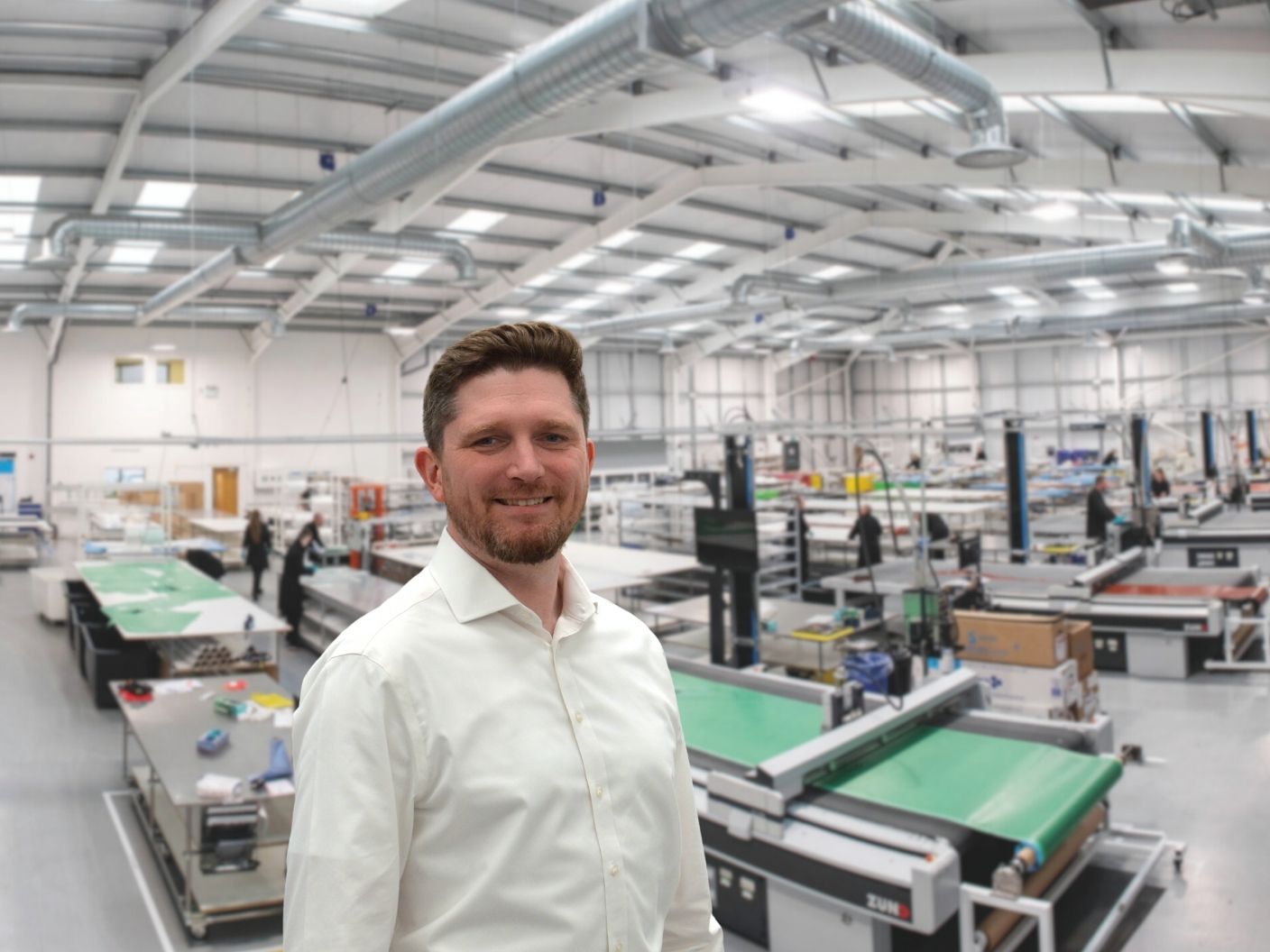
Velocity positions its business squarely within that challenge. The company pioneered a fully outsourced composite material kitting model designed to streamline how raw materials move from supplier to production line. By integrating procurement, precision cutting, inventory management and just-in-time kit delivery into a single managed service, Velocity aims to remove complexity from the aerospace raw material supply chain.
Operating facilities across the UK, Europe and North America, the company supports major aerostructure manufacturers with a model built around efficiency, traceability and operational control. Rather than simply supplying materials, Velocity focuses on reducing waste and improving material utilisation across the entire manufacturing process.
Central to that approach is the company’s proprietary digital platform, VRP, which enables real-time visibility of material movement and consumption. The system provides detailed traceability and data insights that allow manufacturers to optimise production planning, improve quality assurance and reduce the working capital tied up in excess inventory.
In an industry where material costs are high and certification standards are stringent, that level of control has become increasingly valuable as manufacturers seek to increase production rates without introducing new operational risks.
Velocity argues that such solutions will be essential as aerospace enters a period of sustained composite growth. With composite usage forecast to rise significantly over the coming decades, manufacturers will require more intelligent supply chain models capable of supporting higher production volumes while maintaining tight control over cost and material flow.
The company’s global facilities are currently capable of supporting up to £70 million in annual revenue, with a stated ambition to reach £100 million turnover within five years as contracted programmes mature and aircraft production rates continue to increase.
Alongside its established presence in civil aerospace, Velocity is also expanding its activity within defence programmes, providing additional stability across industry cycles and positioning the business to support long-term government-backed platforms. Its customer base includes major aerospace and defence manufacturers such as BAE Systems and GKN Aerospace.
For Velocity, JEC World provides an important platform to engage directly with the international composites community. Held annually in Paris for more than sixty years, the exhibition brings together material suppliers, manufacturers, researchers and aerospace OEMs to showcase the technologies shaping the future of composite manufacturing.
Visitors to Hall 6, Stand T62 will be able to meet Eastbury and Smalley to discuss how outsourced kitting and digital material management can help manufacturers reduce waste, strengthen supply chain resilience and prepare for the next phase of aerospace production growth.
In a sector defined by precision, regulation and long programme lifecycles, Velocity’s message is straightforward: the future of aerospace manufacturing will depend not only on advanced composite materials, but on the intelligent systems that manage those materials from source to structure.