As aerospace manufacturers push for higher production rates while managing cost, complexity and risk, the spotlight is increasingly falling on how efficiently the front end of the supply chain can operate.
For Velocity Composites plc, the answer lies in a proprietary, fully digital manufacturing approach that is redefining how composite material kits are produced, controlled and delivered at scale.
At the core of this strategy is a recently developed in-house digital manufacturing cell — a system designed not only to enhance efficiency at a single site, but to be replicated across multiple facilities, creating a consistent, scalable and resilient operating model.
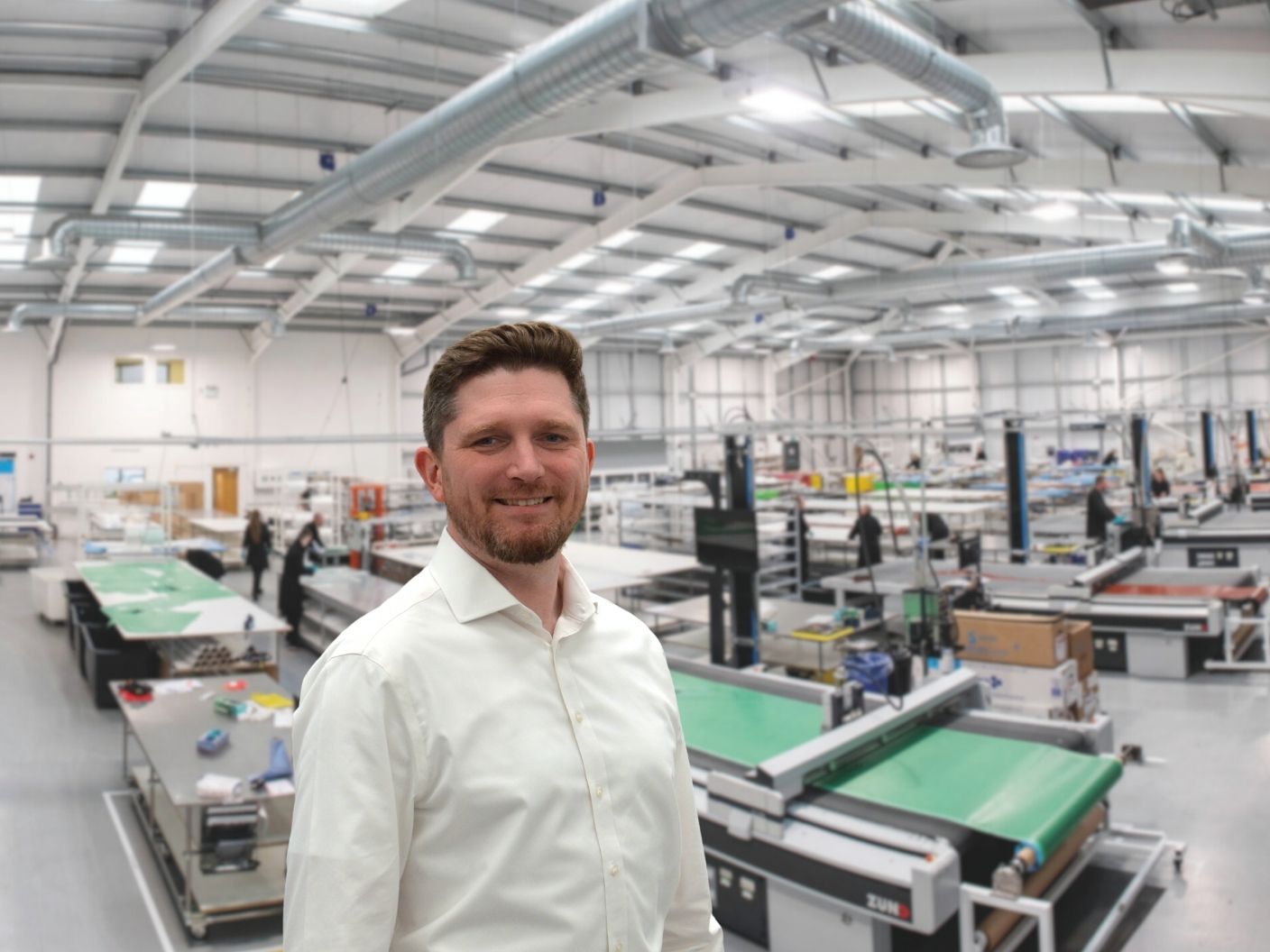
Oliver Smalley, Chief Operating Officer, explains that the technology represents a significant step forward in how Velocity supports its aerospace customers.
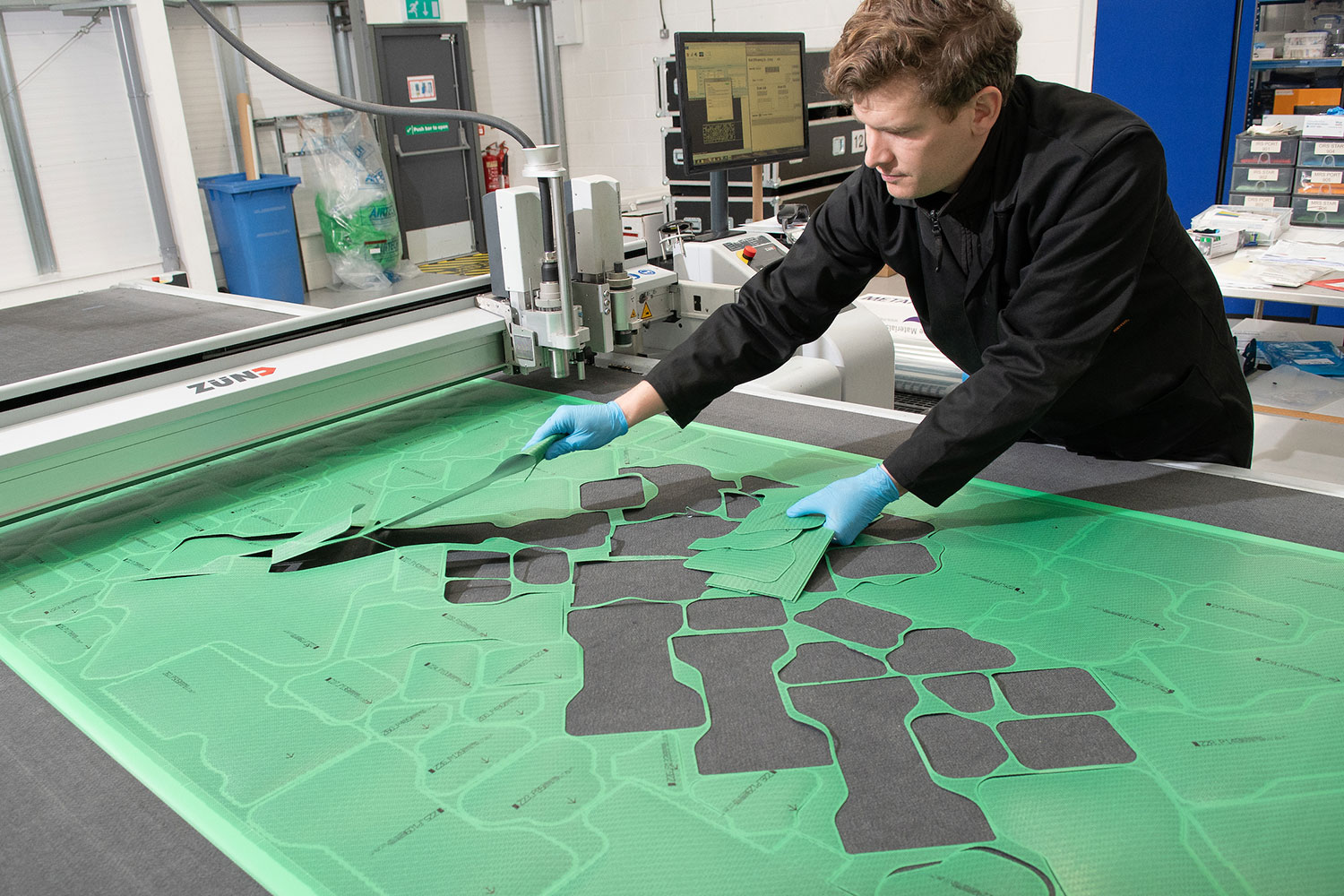
“To further enhance its value to customers and drive further efficiencies, Velocity has recently developed a fully digital in-house manufacturing cell, which can be replicated across all sites,” he says. “We are cutting numerous and complex products from materials whilst maintaining full batch traceability, and our digital manufacturing cell allows us to campaign larger nests across multiple kits/customers where specifications allow.”
This ability to process larger, combined material “nests” across different programmes is a key differentiator. By consolidating cutting operations where possible, Velocity is able to maximise material utilisation while maintaining the strict traceability standards required in aerospace manufacturing.
The result is a more efficient use of high-value composite materials, reduced waste and improved throughput — all without compromising the integrity or traceability of individual customer kits.
Critically, the system also enables rapid sorting and reallocation of these complex nests back into individual kits in real time. This ensures that even as efficiency increases, precision and control remain absolute — a balance that is essential in an industry where quality and compliance are paramount.
Beyond efficiency gains, the digital manufacturing cell is designed to address one of the most pressing operational challenges in composite manufacturing: time sensitivity. With many aerospace materials subject to limited shelf lives, the ability to optimise batch selection and accelerate processing directly impacts both cost and performance.
By digitising the entire workflow — from material receipt through to cutting, tracking and kit assembly — Velocity is able to manufacture and deliver kits within tightly controlled timeframes, preserving material viability and supporting customers’ production schedules.
The system’s architecture also reinforces resilience. Because the model is standardised and replicable, it enables Velocity to deploy consistent processes across different locations, reducing dependency on individual sites and improving responsiveness to changing customer demand.
This scalability is increasingly important as aerospace programmes ramp up and supply chains come under renewed pressure. Manufacturers are looking for partners who can not only deliver efficiency, but also adapt quickly to fluctuations in volume and complexity.
Velocity’s investment in proprietary technology reflects this shift. Rather than relying on off-the-shelf systems, the company has developed its digital manufacturing capabilities in-house — allowing it to tailor processes specifically to the demands of composite kitting and maintain a competitive edge.
For customers, the impact is tangible: improved material yield, reduced waste, enhanced traceability and a more predictable, reliable supply of kits aligned precisely to their build requirements.
As the aerospace sector continues to evolve, solutions that combine digital innovation with practical manufacturing outcomes will play an increasingly central role.
For Velocity Composites, the digital manufacturing cell is more than a technological upgrade — it is a foundation for a more resilient, efficient and scalable supply chain model, designed to meet the demands of modern aerospace production.