Composite materials are now fundamental to aerospace’s future — enabling lighter structures, greater fuel efficiency, and the performance gains required to meet tightening environmental and economic pressures.
For Velocity Composites, that shift is driving both opportunity and responsibility.
“Composites are now central to how our customers think about aircraft design, production, and lifecycle performance,” says Chief Customer Officer James Eastbury. “That changes the conversation. We’re talking about enabling growth for our customers as aircraft orders ramp up.”
Eastbury’s role places him at the interface between Velocity and some of the world’s most demanding aerospace manufacturers. His focus is on ensuring that as composite content increases across platforms, Velocity’s customers can scale production without introducing risk, bottlenecks, or unnecessary cost.
One of the defining challenges of today’s aerospace recovery is its uneven nature. While long-term demand remains strong, production ramps are constrained by labour shortages, certification delays, and supply chain fragility. In that environment, composite material availability — and the ability to use it efficiently — becomes a critical lever.
“Our customers don’t want to hold excess stock, but they also can’t afford shortages,” Eastbury explains. “Our job is to sit in that space and make it work — balancing forecast uncertainty with absolute delivery reliability.”
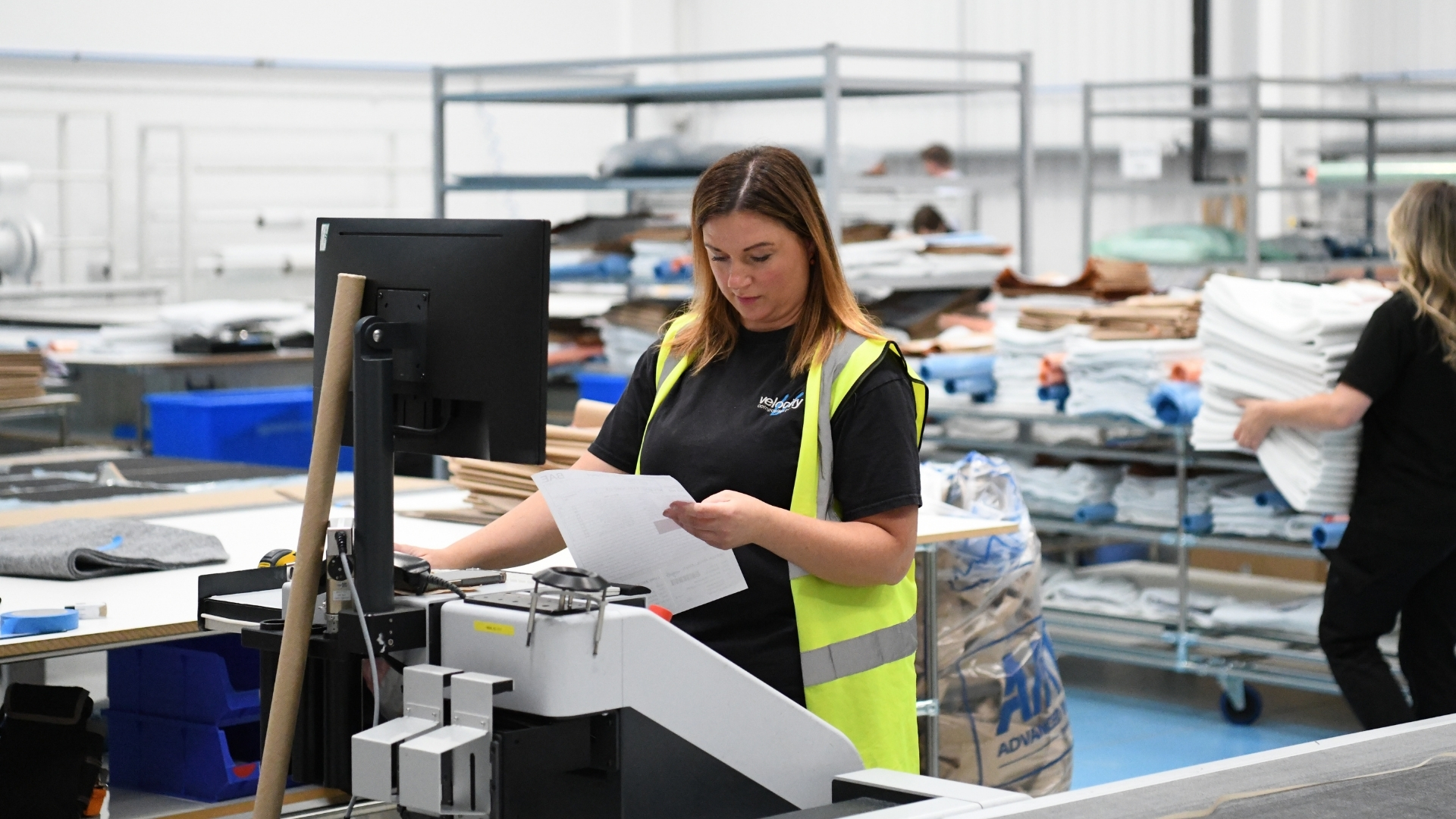
Velocity’s engineered kit model supports that balance. By removing raw material handling, cutting, and preparation from the customer’s factory floor, the company reduces labour dependency while improving consistency and predictability. This becomes particularly valuable as manufacturers introduce new programmes or ramp composite-intensive platforms.
Growth, however, cannot just be about volume. Eastbury believes that Velocity’s value increasingly lies in helping customers standardise and industrialise composite manufacturing.
“Every minute we save on the shop floor, every kilogram of material we prevent from becoming waste — that compounds over thousands of shipsets,” he says. “That’s how composites move from advanced technology to repeatable, scalable manufacturing.”
As aerospace primes for the next production upswing, Velocity’s customer-centric growth strategy is built around long-term partnerships rather than transactional supply. The company is positioning itself as a trusted enabler — helping customers navigate complexity today while preparing for the production rates of tomorrow.